

OPTICAL-GENOMIC FOUNDATION DATA FROM INTACT TISSUE
Understanding the
pathology dataset
begins before H&E.
SmartPath captures native surface-weighted, 270 nm-excited UVF from
unsectioned, minimally prepared tissue, pairs it with virtual H&E and spatial
provenance, then preserves the specimen for morphology, IHCm FISH sequencing,
outcomes, and response. Bio-Optical Phenotyping turns that measurement into
computational tissue biology, not another archive of rendered slides.
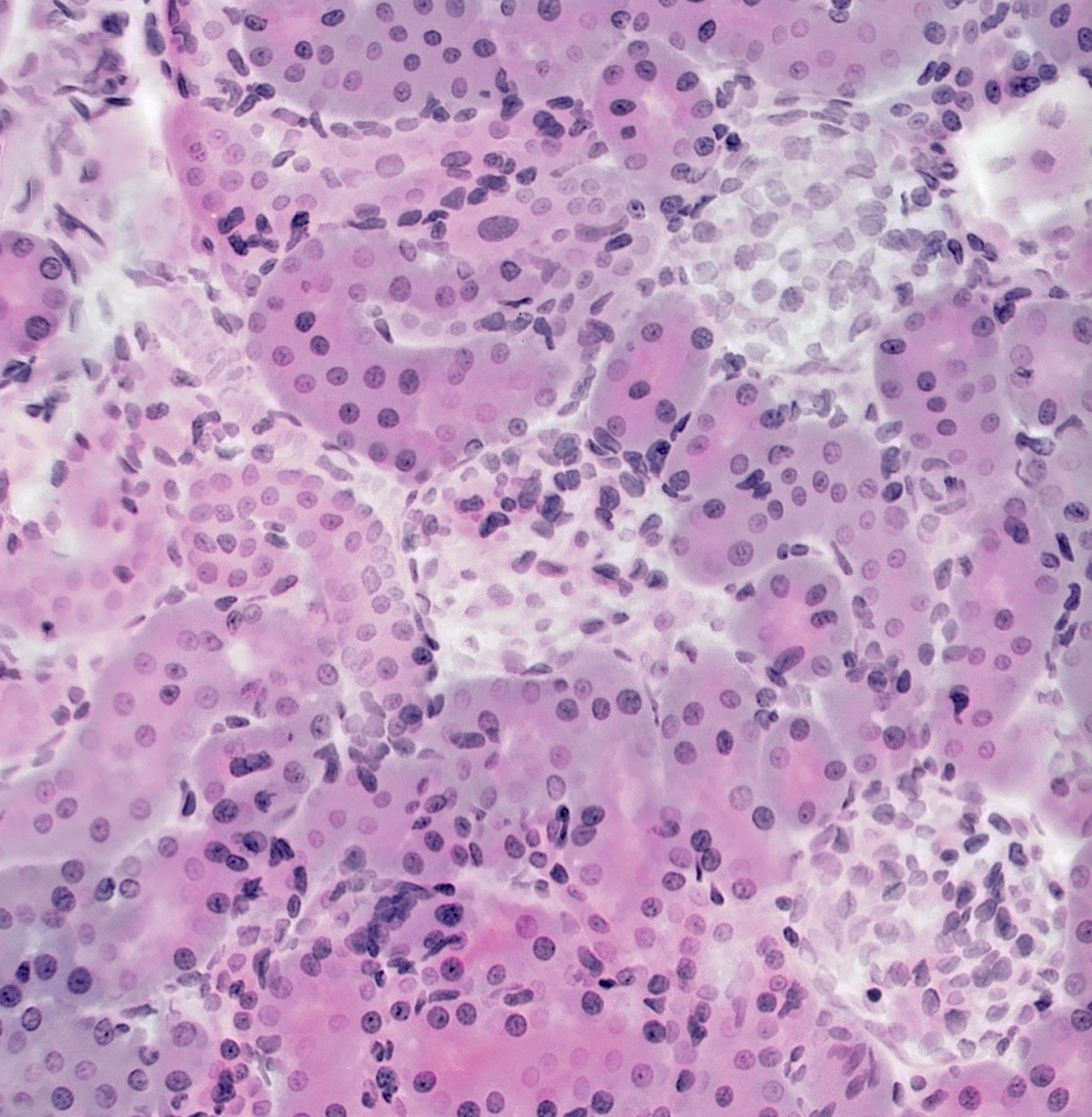
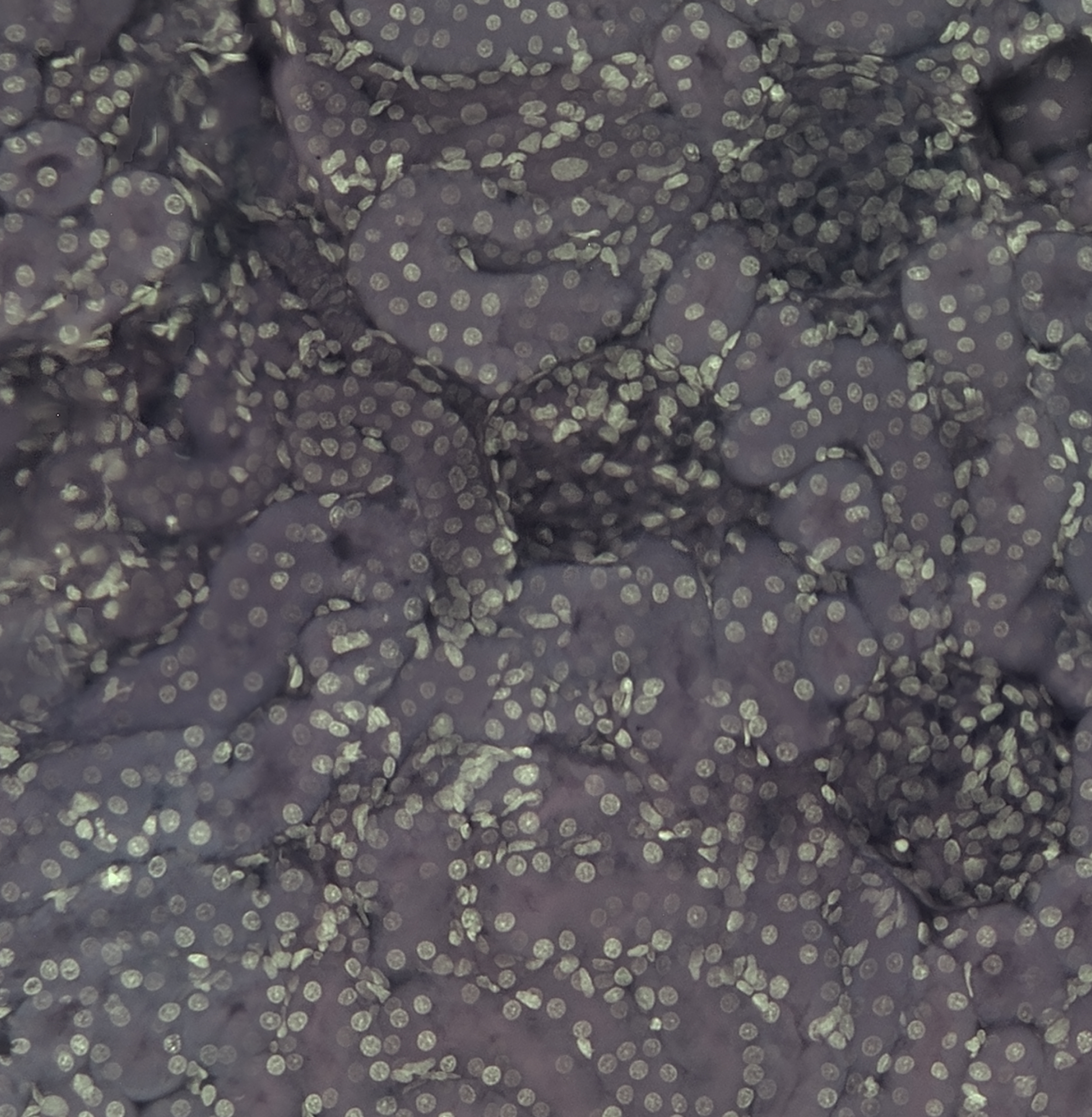
Drag to compare paired representations
same 28,512 × 25,287 px specimen field
1.44GP
UVF + derived vH&E output
48 fields
spatially registerred + traceable
6x-10x*
conditional depth model vs. 4-5 um section
NEW EXTERNAL EVIDENCE
Related human evidfence; modality transfer to SmartPath must be tested
Bio-Optical Phonotyping asks wheather the downstream consequences of genotype, signaling, metabolism, microenvironment, and treatment state are encoded in a high-dimensional optical field that AI can learn after conditioning on mophology and acquisition quality.
A TESTABLE
OPTICAL-BIOLOGICAL
HYPOTHESIS, GROUNDED IN
REAL SMARTPATH DATA.
WHY A LEADING AI PARTNER SHOULD CARE
New modality. Paired supervision. A datascale Question.
The literature increasingly supports the premise that native optical measurements can encode molecular and metabolic state. The frontier is now to determine which endpoints are stable, reproducible, and incrementally informative at population scale and to build the dataset capable of answering that question.
Differentiated signal
Native UVF preserves
intensity, channel
covariance, texture, and
spatial struction upstream
of virtual staining.
INCREMENTAL-INFORMATION HYPOTHESIS
Cross-modal pairs
UVF and virtual H&E share
acquisition geometry,
enabling aligned
representation learning
and transformation-quality
analysis.
NATURAL SUPERVISION PAIR
Hierarchical fields
Pixels, local
neighborhoods, tiles,
compiled mosaics, and
specimen-level states with
non-stationary statistics at
every scale.
MULTISCALE MODEL SUBSTRATE
Instrument context
Excitation, exposure,
optics, overlap,
reconstruction, and QC
residuals can enter the
model rather than remain
hidden confounders.
DOMAIN-SHIFT CONTROLS
Linked truth
The same preserved
specimen can proceed to
conventional pathology,
molecular assays,
outcomes, or
pharmacologic endpoints.
GROUND-TRUTH EXTENSIBILITY
Name the biology. Separate the digital state.
A precise vocabulary prevents the platform from being mistaken
for virtual staining or image-quality analytics. The core distinction
is eplicit: the Bio-Optical Phenotype describes biology; the NDPV
describes the digital measurement.
LATENT BIOLOGICAL STATE
Bio-Optical Phenotype
Tissue composition, metabolism, signaling, microenvironment, architecture, treatment response.
270 NM EXCITATION
measured through optics
LLINKED TRUTH
OBSERVABLE DIGITAL STATE
MUSE Digital Phenotype Vector
UVF, spatial fields, vH&E, descrptors, embeddings, QC, provenance.
SCIENTIFIC BOUNDARY
The digital representation may contain evidence about biological state. It does not become the biological state merely because a model can encod or classify it.
THE CONCEPTUAL ANCHOR
Radiomics made hidden image
strucure computable.
Bio-Optical Phenotyping
applies that move upstream.
The analogy gives technical reviewers a familiar frame while preserving the differences in modality, physics, biological linkage, and validation.
Radiology
- Medical image
- Radiomic representation
- Clinical association
Images contain latent quantitative information beyond visual interpretation.
BIO-OPTICAL PHENOTYPING
- Native optical field
- MDPV
- Biological association